

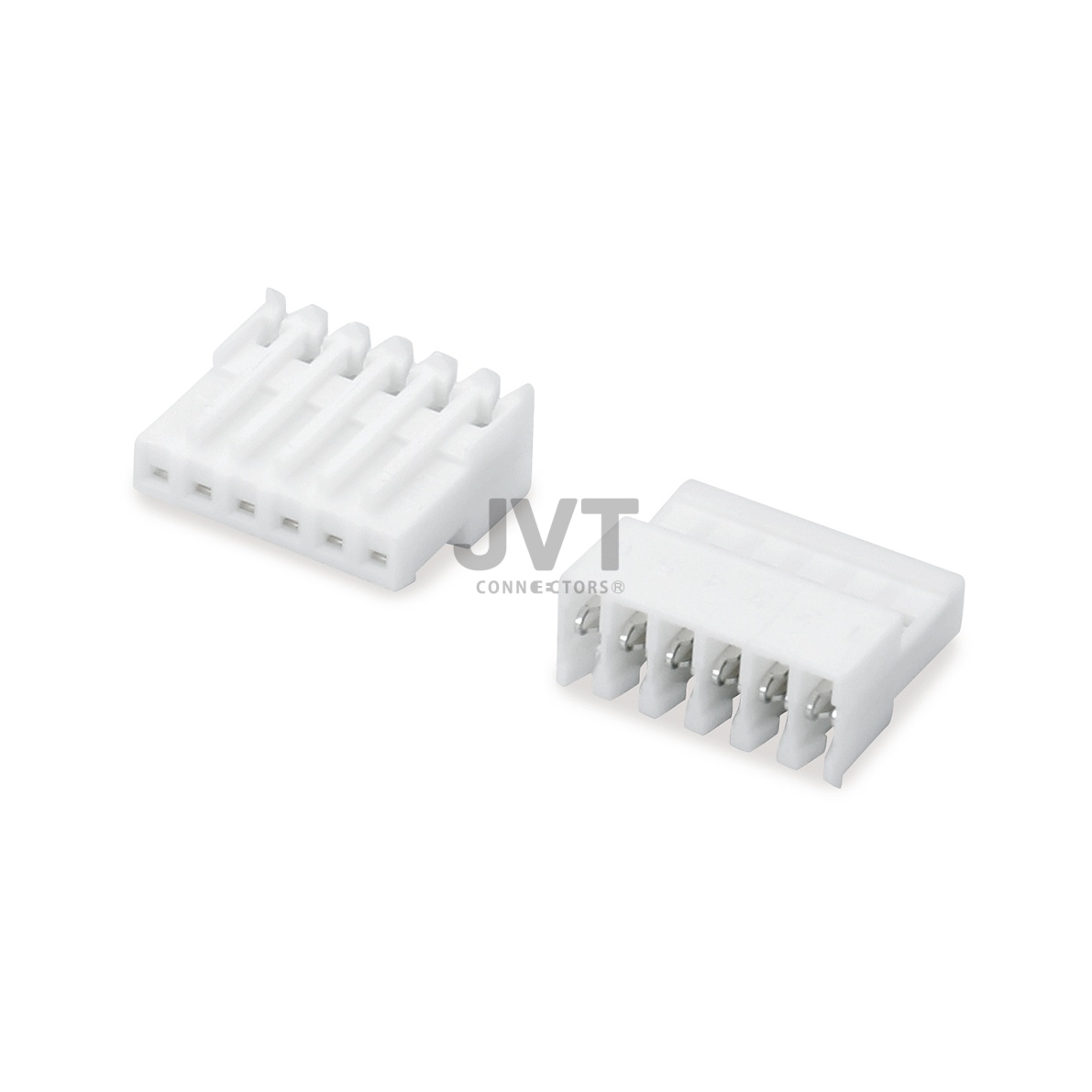
A medical device connector leads two lives. During operation it carries very small signals from a transducer or an imaging head, where a change of a few microvolts matters. Between patients it is cleaned, wiped, or immersed in a disinfectant that was chosen to destroy microorganisms and is not particularly kind to metal. The same part therefore has to be electrically stable and chemically durable, and those two requirements pull material selection in different directions. On a program covering ultrasound examination equipment and an endoscopic imaging head, the customer's engineering team asked us to look at the sensor interface after corrosion appeared on the contact plating of an older design.
This case study explains what patient-contact and reusable medical equipment actually demand from an interface, why plating chemistry drives the decision more than contact geometry, and how we approached the substitution. It is written for engineers and buyers specifying connectors for imaging equipment, patient monitoring, and reusable instruments.
What a Medical Device Connector Has to Satisfy at Once
Four requirements apply to almost every reusable medical interface, and it is worth listing them together because they interact.
- Signal integrity at very low levels. Ultrasound transducer channels and endoscopic imaging heads return analogue signals at low amplitude and high impedance. Contact resistance drift that would be invisible in a power circuit shows up here as image artefacts.
- Chemical durability. Repeated disinfection exposes the connector to alcohol, quaternary ammonium compounds, and sometimes oxidising agents. Each of those attacks different metals at different rates.
- Cleanability. Crevices that trap soil are a problem regardless of how well the electronics perform, so housing geometry is part of the design review and not only the electrical drawing.
- Material declaration. Medical equipment manufacturers collect declarations covering restricted substances, and a component without paperwork becomes a documentation project at the worst possible time.
None of those requirements is unusual on its own. The difficulty is that a plating chosen for the lowest contact resistance is often not the plating that survives the disinfectant, and a housing geometry that is easy to clean may be harder to seal.
Why Plating Chemistry Drives the Decision
On the older design, the visible problem was discolouration and pitting on the contact surfaces after a period of routine cleaning. The electrical symptom was a slow drift in the imaging channel, and the two were connected: as the plating broke down, contact resistance rose and the low level signal path became less repeatable.
Corrosion resistant plating for repeated disinfection
For this interface we supplied terminals with corrosion resistant plating selected for compatibility with routine disinfection, together with the material declarations the customer needed for their compliance file. The customer's own cleaning validation then confirmed that the interface held up under their specific cycle.
Fine pitch for a small imaging head
An ultrasound probe handle and an endoscopic head leave very little room for the signal path. The families we proposed cover fine pitch options down to 1.00 mm and 0.80 mm, with the 1.27 mm family as the practical starting point where the channel count is moderate and the assembly tooling is already established.
Optional flexible cable interfaces
Where the imaging head is separated from the electronics by a flexible circuit, an FFC/FPC interface can replace a large part of the discrete wiring. That reduces the number of terminations in a small space, which in a reusable instrument also reduces the number of crevices that have to be cleaned.
Interface configuration for this program
Connector families offered: fine pitch wire-to-board from 1.27 mm down to 0.80 mm, plus FFC/FPC interfaces for the flexible section of the signal path.
Terminals: corrosion resistant plating selected against the customer's disinfection chemicals.
Applications: ultrasound examination equipment and an endoscopic imaging head, both reusable instruments.
Documentation: RoHS and REACH declarations supplied for the medical equipment compliance file.
What the Program Reported
The outcomes below are the ones reported for this program. They describe this instrument design and the customer's own cleaning protocol.
| Item | Previous interface | JVT interface |
|---|---|---|
| Contact surface condition | Discolouration and pitting after routine cleaning | Corrosion resistant plating specified for the cleaning chemicals |
| Signal stability | Slow drift in the imaging channel | Interface no longer the suspected cause of image artefacts |
| Space envelope | Discrete wiring in a small handle | Fine pitch interface, with FFC option for the flexible section |
| Cleanability | Many small terminations to clean around | Fewer interfaces, reviewed as part of the housing design |
| Compliance paperwork | Assembled from multiple sources | Material declarations issued with the shipment |
The lesson the customer drew from the project is worth repeating: on a low level signal path, the plating is the design decision. Geometry determines whether the connector fits, and plating determines whether it still behaves the same way after a year of cleaning.
How to Approach a Reusable Instrument Interface
Two habits make medical interface projects go more smoothly. The first is to define the cleaning cycle before selecting the connector, because the chemical exposure is the harshest condition the part will meet and it happens hundreds of times. Write down the disinfectant chemistry, the contact time, and whether the part is wiped or immersed.
The second is to involve the connector supplier in the mechanical review rather than only in the electrical one. Housing geometry affects how cleanable the assembly is, how the cable exits the handle, and how much strain relief the user unknowingly applies every time the instrument is handled. On this program, moving from discrete wiring to a fine pitch interface reduced the number of places that needed cleaning, and that changed the housing design in ways the electrical drawing never would have shown.
Why Choose JVT as Your Long-Term Interconnect Partner?
JVT is the brand of Dongguan JVT Connectors Co., Ltd., a connector manufacturer established in Dongguan, Guangdong in 2006, with a 6,500 square metre plant and a branch in Wujiang, Jiangsu. Injection moulding, stamping, and automatic pin insertion run in our own factory, supported by more than twenty injection moulding machines, more than twenty stamping presses, and more than fifty automatic pin insertion machines, along with in-house engineering for tooling and plating specification. Our management systems are certified to ISO 9001, ISO 14001, IECQ QC080000, and IATF 16949, and our products are tested by UL and SGS.
Our product families include wire-to-board, wire-to-wire, board-to-board, IDC, pin header, DC connectors, board-in terminals, FFC/FPC, and a complete terminal series, with nineteen pitch steps from 6.35 mm down to 0.60 mm. Application ranges cover automotive, low-altitude flight, lithium battery 3C, power tool, power module, industrial, consumer, new energy, home appliances, and computer equipment, and our connectors are exported to customers in North America, Europe, the Middle East, India, Brazil, Korea, Turkey, Malaysia, Canada, and the United States among other markets.
For instrument signal paths, the useful entry points are the wire-to-board connector families, the fine pitch 1.27 mm pitch series, and the FFC/FPC connector range for flexible sections of the signal path.
Frequently Asked Questions About the Medical Device Connector
Which plating is best for a connector that is disinfected repeatedly?
It depends on the disinfectant chemistry and the contact time rather than on a single best metal. Gold is often selected for low level signal paths because it resists oxidation, but the underplating and the thickness matter just as much as the top layer, and the choice should be checked against the cleaning agent your protocol actually uses.
How can a connector affect image quality?
Through the signal return path. A transducer channel carrying a small analogue signal is sensitive to any change in contact resistance, because that change appears as gain variation or noise. Plating degradation and micro-movement at the interface are the two mechanisms that produce it.
Can you supply fine pitch connectors for a handheld probe?
Yes. Our pitch range goes down to 0.60 mm, and 1.27 mm, 1.00 mm, and 0.80 mm families are commonly used in compact instrument handles. Where the channel count is high, an FFC/FPC interface is often more practical than a discrete wire bundle.
Do you provide material declarations for medical equipment files?
RoHS and REACH declarations are issued with our shipments on request, and we can discuss specific restricted substance requirements during the specification stage so that the documentation is complete before your compliance review.
What should I include in a connector enquiry for a reusable instrument?
Send the channel count and signal type, the available space in the handle, the cleaning agent and contact time, the number of cleaning cycles expected over the instrument life, and any existing part number. With those five items we can shortlist a family and a plating specification before any drawings are exchanged.
If corrosion appears on your imaging interface after a year of routine cleaning, the plating is usually the place to start. Tell us your cleaning agent, cycle count, and channel count, and we will propose a medical device connector family with samples for your own cleaning validation.
Check the 1.27 mm Pitch Range Talk Through Your Cleaning Cycle